
In a small Gulf city, two friends—Alex and Jordan—still walk the same park, still share the same horizon, and still see the world differently.
Alex calls this era a golden age—overflowing with innovation, access, and possibility. Jordan sees uncertainty, division, and noise thick enough to drown out hope.
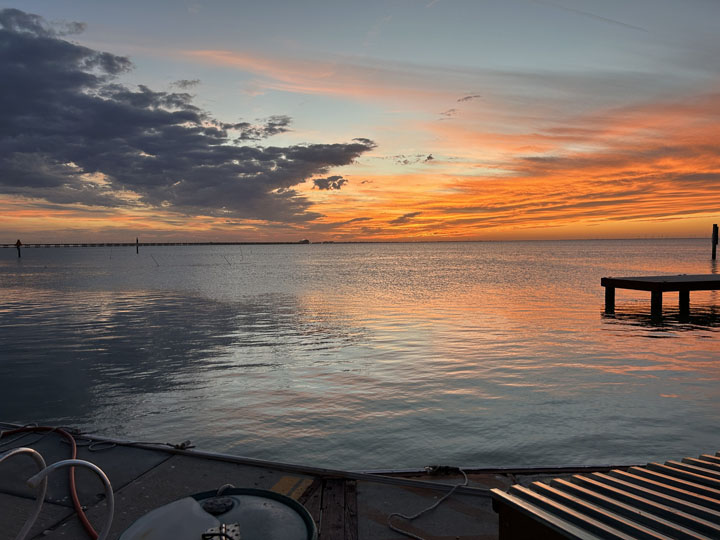
One evening, as the sun lowered over the Laguna Madre, Alex said quietly, “Isn’t it strange how two people can stand in the same light and see different worlds?”
Jordan nodded. “It’s like we’re living in two timelines at once. One thinks this is the best of times. The other is bracing for the worst.”
They’ve had this conversation before. But something has changed.
Alex has been reading about gratitude—not the surface-level kind, but the kind that chooses presence even when pain hasn’t disappeared. Jordan has been wrestling with old disappointments, realizing how easily yesterday’s wounds can tint today’s sky.
“I used to think optimism meant ignoring reality,” Jordan admitted.
“And I used to think realism meant bracing for impact,” Alex replied.
They both laughed.
What they’ve come to understand is something deeper—something I’ve written about across many of my books.
In No Grapes in Grateful, I wrote that gratitude doesn’t deny hardship; it reframes entitlement. In Stillness in the Storm, I explored how our internal posture determines whether life feels like chaos or curriculum. In Big Enough Now, I reflected on how our capacity—not our circumstances—often determines what overwhelms us.
Alex said, “Maybe the world hasn’t changed as much as our lenses have.”
Jordan looked at the water. “Or maybe both can be true. There’s beauty and brokenness at the same time.”
That tension is the paradox.
In Waves, Wind, and Wisdom, I wrote about sunsets that don’t ask your political affiliation before painting the sky. In Understand the Past, I acknowledged how unhealed memory shapes present perception. In No Regrets, I wrestled with the idea that time doesn’t run—it unfolds. And within that unfolding, we choose how we participate.
Sitting there, neither friend was trying to win the argument anymore.
They were listening.
Jordan spoke first this time. “Maybe the golden age and the dark age are just seasons overlapping.”
Alex smiled. “Ecclesiastes said there’s a time for everything. Maybe we’re just standing at the intersection.”
The park grew quiet as the light faded. Children laughed in the distance. Couples strolled by. A fisherman packed up for the night. Life, indifferent to debate, continued unfolding.
That’s the lesson.
The world outside may never fully align with our preferences. But the world inside—our interpretation, our response, our posture—remains within reach.
Our minds do create the world we live in.
And perhaps maturity is learning to hold both truths at once:
Yes, there is darkness.
And yes, there is gold in the light.
The paradox is not something to solve.
It is something to inhabit—consciously.
As Alex and Jordan stood to leave, there was no final verdict, no grand resolution.
Just two friends walking into the same evening—
seeing it a little more clearly than before.Perception’s Paradox — A Short Story By Keith Thorn
In a small Gulf city, two friends—Alex and Jordan—still walk the same park, still share the same horizon, and still see the world differently.
Alex calls this era a golden age—overflowing with innovation, access, and possibility. Jordan sees uncertainty, division, and noise thick enough to drown out hope.
One evening, as the sun lowered over the Laguna Madre, Alex said quietly, “Isn’t it strange how two people can stand in the same light and see different worlds?”
Jordan nodded. “It’s like we’re living in two timelines at once. One thinks this is the best of times. The other is bracing for the worst.”
They’ve had this conversation before. But something has changed.
Alex has been reading about gratitude—not the surface-level kind, but the kind that chooses presence even when pain hasn’t disappeared. Jordan has been wrestling with old disappointments, realizing how easily yesterday’s wounds can tint today’s sky.
“I used to think optimism meant ignoring reality,” Jordan admitted.
“And I used to think realism meant bracing for impact,” Alex replied.
They both laughed.
What they’ve come to understand is something deeper—something I’ve written about across many of my books.
In No Grapes in Grateful, I wrote that gratitude doesn’t deny hardship; it reframes entitlement. In Stillness in the Storm, I explored how our internal posture determines whether life feels like chaos or curriculum. In Big Enough Now, I reflected on how our capacity—not our circumstances—often determines what overwhelms us.
Alex said, “Maybe the world hasn’t changed as much as our lenses have.”
Jordan looked at the water. “Or maybe both can be true. There’s beauty and brokenness at the same time.”
That tension is the paradox.
In Waves, Wind, and Wisdom, I wrote about sunsets that don’t ask your political affiliation before painting the sky. In Understand the Past, I acknowledged how unhealed memory shapes present perception. In No Regrets, I wrestled with the idea that time doesn’t run—it unfolds. And within that unfolding, we choose how we participate.
Sitting there, neither friend was trying to win the argument anymore.
They were listening.
Jordan spoke first this time. “Maybe the golden age and the dark age are just seasons overlapping.”
Alex smiled. “Ecclesiastes said there’s a time for everything. Maybe we’re just standing at the intersection.”
The park grew quiet as the light faded. Children laughed in the distance. Couples strolled by. A fisherman packed up for the night. Life, indifferent to debate, continued unfolding.
That’s the lesson.
The world outside may never fully align with our preferences. But the world inside—our interpretation, our response, our posture—remains within reach.
Our minds do create the world we live in.
And perhaps maturity is learning to hold both truths at once:
Yes, there is darkness.
And yes, there is gold in the light.
The paradox is not something to solve.
It is something to inhabit—consciously.
As Alex and Jordan stood to leave, there was no final verdict, no grand resolution.
Just two friends walking into the same evening—
seeing it a little more clearly than before.