
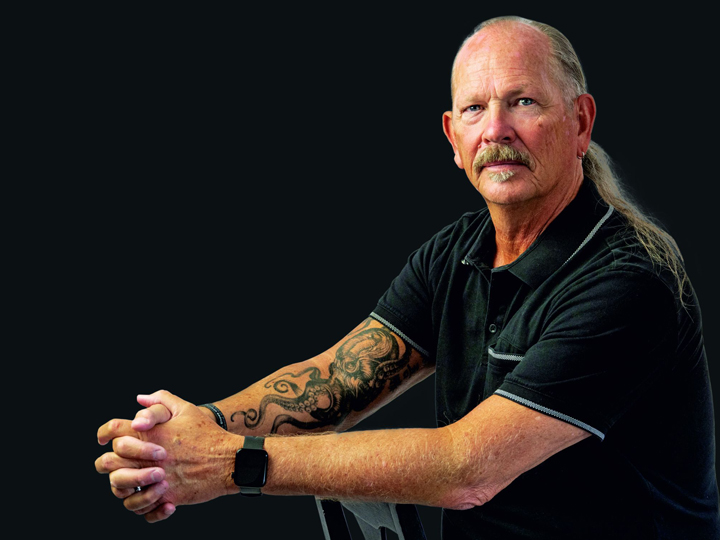
Growing up, I learned early what it feels like to be small—physically, emotionally, and socially.
At three years old, spinal meningitis nearly killed me. It left my body fragile and my confidence fractured. By ninth grade I was barely 4’11”. When I finally grew to 5’11” in tenth grade, I still weighed just 98 pounds. Frailty in a hard world teaches you something quickly: you either learn to disappear—or you learn to fight.
I chose to fight.
Anger became my armor. It was how I stayed upright in a life that felt unprotected. My mother worked long hours to keep us afloat, and like many kids left to raise themselves, I built my own code—one rooted in defiance, impulse, and survival. I fought constantly. Not to win—but because I believed I had nothing to lose.
Wrestling heavier opponents. Swinging first in arguments. Reacting before thinking. Conflict wasn’t something I encountered; it was something I carried.
Even into adulthood, that reflex followed me. I still remember playing shortstop in a church softball league—of all places—when a disagreement over a tag turned into a full-blown fight. Church league. Softball. We were both ejected.
Who does that?
Someone who hasn’t yet learned stillness.
Then I met Mark Rubbert Sensei.
He was everything I wasn’t: calm, centered, unhurried. At 6’4” and 260 pounds, he had never been in a fight. That fact alone shook me. How could someone that strong not need anger as protection?
Around the same time, I was sitting in church hearing sermons about peace and love—yet the moment pressure arrived, I was still reacting like the third monkey on the ramp to Noah’s Ark… and it was raining.
Aikido changed that.
Not by teaching me how to win fights—but by teaching me how not to need them.
Ki-Aikido introduced concepts that felt almost foreign at first: center, breath, posture, relaxation under pressure. Instead of meeting force with force, I learned to meet it with awareness. Instead of reacting, I learned to return—to my center, to my body, to choice.
That return became everything. The anger didn’t vanish overnight. But it lost its authority.
Thirty-three years later, I’m still training. And no—I haven’t been perfect. Old instincts still whisper. But I have never been in another fight since stepping onto the mat with Sensei Rubbert.
What changed wasn’t my strength. It was my relationship to power.
That realization runs through Effortless Power: true strength doesn’t come from domination, but from alignment. Through Stillness in the Storm, I’ve written daily about this same truth—that calm isn’t something you achieve once, but something you practice returning to. In Big Enough Now, I explored how many of us carry childhood survival strategies long after they’ve stopped serving us. And in No Grapes in Grateful, I wrote about releasing resentment—not because the past didn’t matter, but because staying trapped in it costs too much.
Ki-Aikido didn’t remove my history. It gave me a way to inhabit the present without being ruled by it.
Fighting was once how I survived. Now, presence is how I live.
The fight is often over before it begins—not because the world got easier, but because I learned to meet it differently.
And that, for me, remains the greatest victory of all.